
Surfacing: Discover which of these four options is right for your project
Surfacing is one of the most significant decisions in a playground project. It affects: safety and fall protection, accessibility, maintenance workload, how the playground looks and feels, and the total project cost, both upfront and long-term.
In this article, we will review the four most common playground surfacing options in plain language:
- PIP (Poured-in-Place Rubber)
- EWF (Engineered Wood Fiber)
- Rubber Tiles
- Turf (Playground Turf / Synthetic Grass Systems)
Table of Contents
- The three surfacing questions that matter most
- The four most popular options for surfacing
- If you need help choosing surfacing that fits your site, budget, and maintenance, send us an email at info@westplay.ca with the following information:
The three surfacing questions that matter most
Before comparing products, you need to answer the following questions:
- What is your top priority?
- Accessibility
- Lowest maintenance
- Lowest upfront cost
- Best aesthetics
- What is your site reality?
- Drainage issues/pooling water
- Heavy shade (slow drying)
- High traffic (schools, busy parks)
- Freeze/thaw exposure
- Who maintains it?
- City operations team
- School/daycare staff
- Contractor
- Volunteer group
Surfacing that is perfect on paper can fail if maintenance doesn’t match.
The four most popular options for surfacing
Option 1: PIP (Poured-in-Place Rubber)
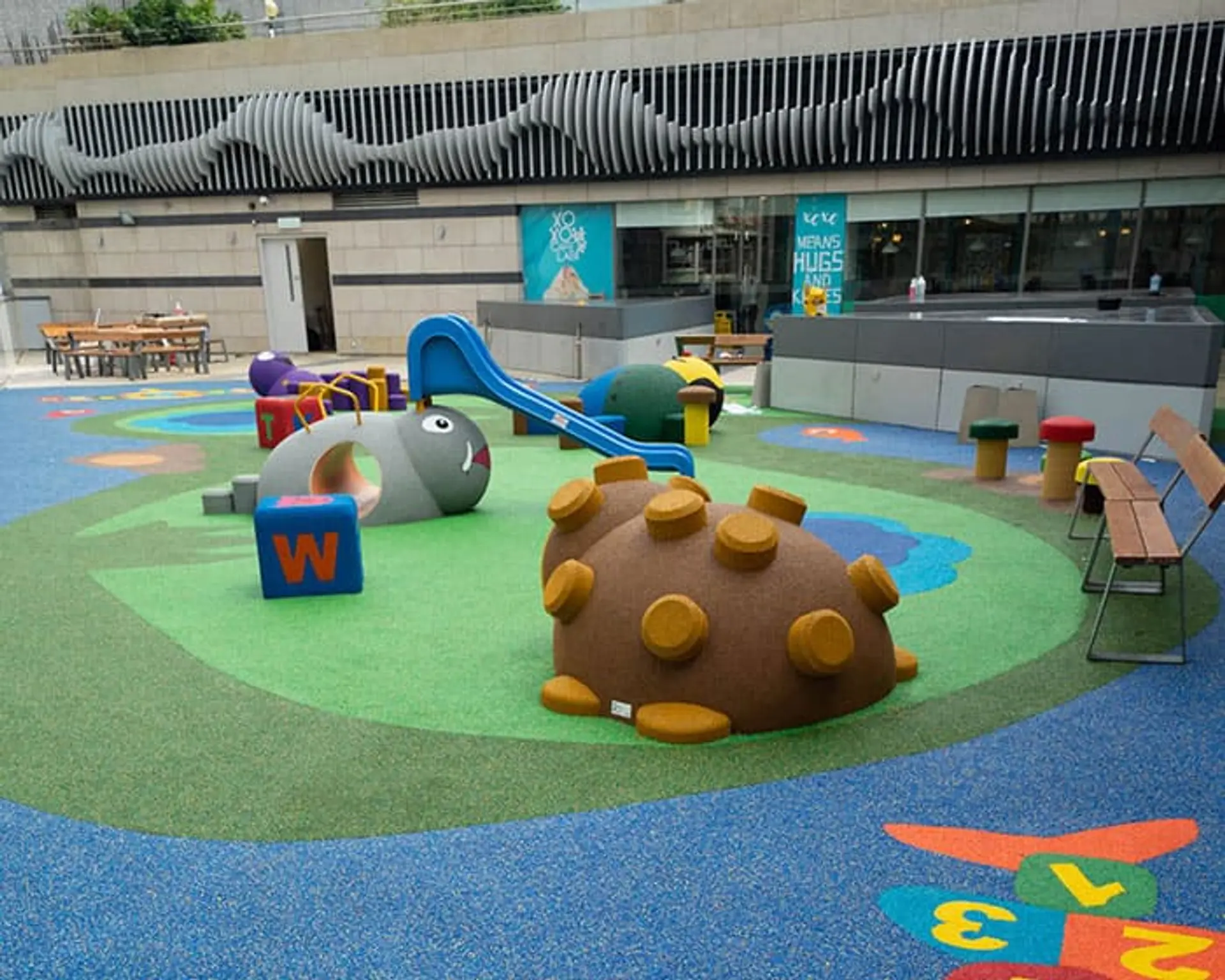
Best for: accessibility + clean look + defined play zones
Why people choose it
- Smooth, stable surface (strong accessibility)
- Can be designed with colours/patterns
- Easy to move across (strollers, mobility devices)
- Works well for high-traffic sites
Watch-outs
- Higher upfront cost
- Requires proper base and drainage planning
- Repairs should be done correctly to avoid patchy results
Concept-stage tip
If you’re considering PIP, flag it early in the design brief because it affects:
- Budget planning
- Base prep assumptions
- Drainage considerations
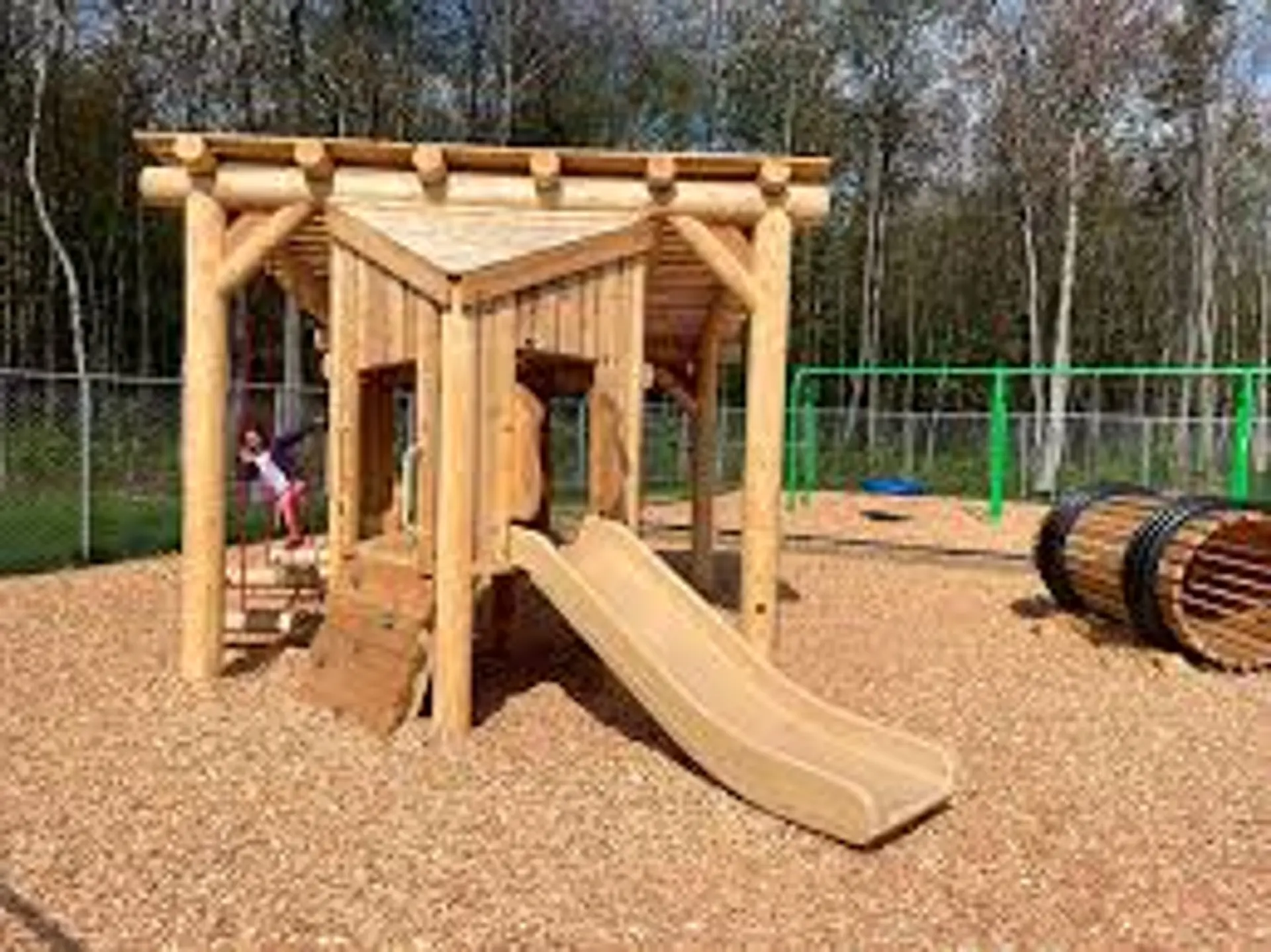
Option 2: EWF (Engineered Wood Fiber)
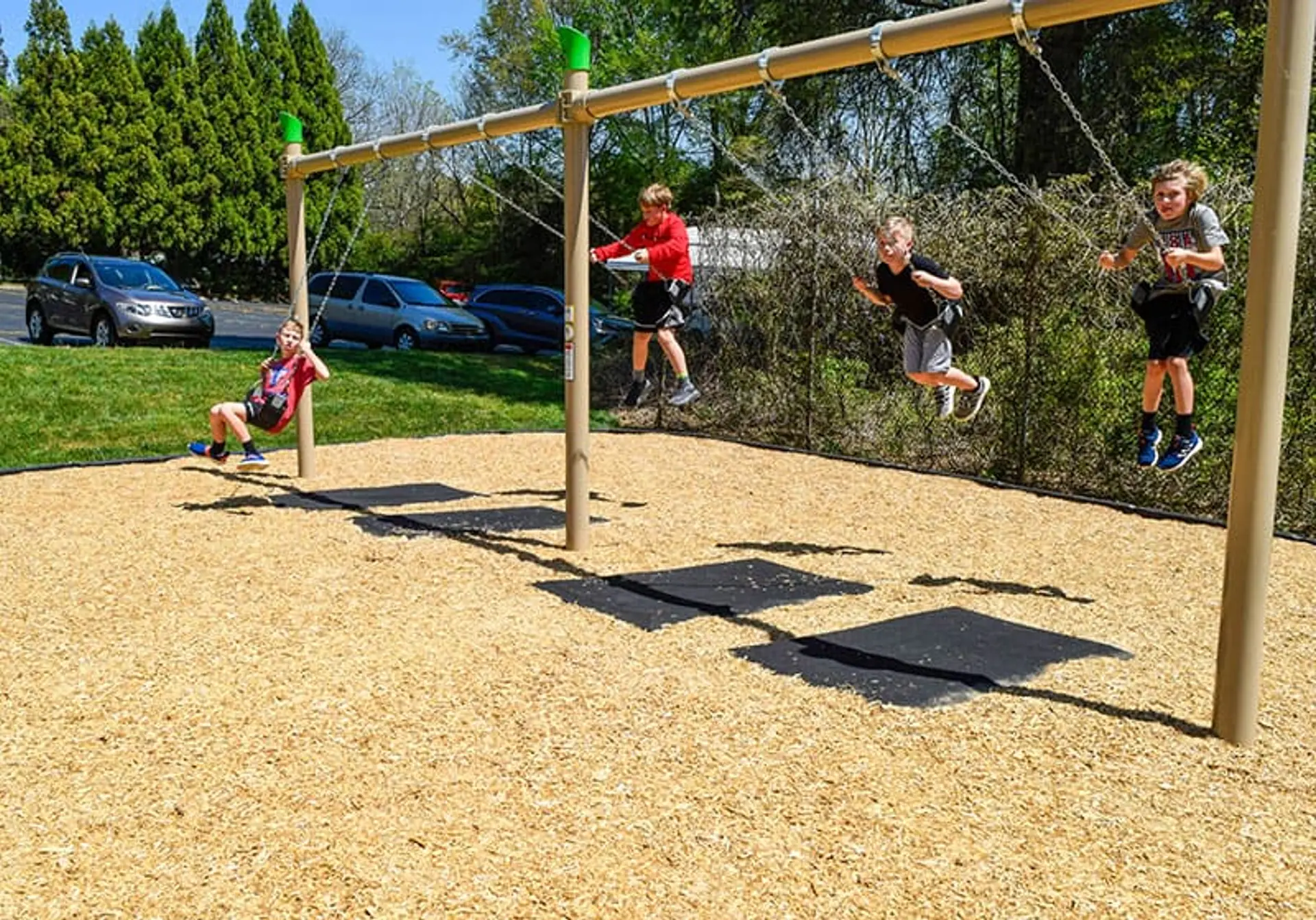
Best for: budget-conscious projects with a plan for maintenance
Why do people choose it
- Lower upfront cost than many alternatives
- Natural look that fits parks and nature-based designs
- Common and widely understood
Watch-outs
- Accessibility can decline if it’s not maintained (ruts, displacement)
- Needs regular raking/top-ups
- Can track and migrate outside the play area
Concept-stage tip
If you choose EWF, plan for:
- Containment edges
- Drainage awareness
- A realistic maintenance routine
Option 3: Rubber Tiles
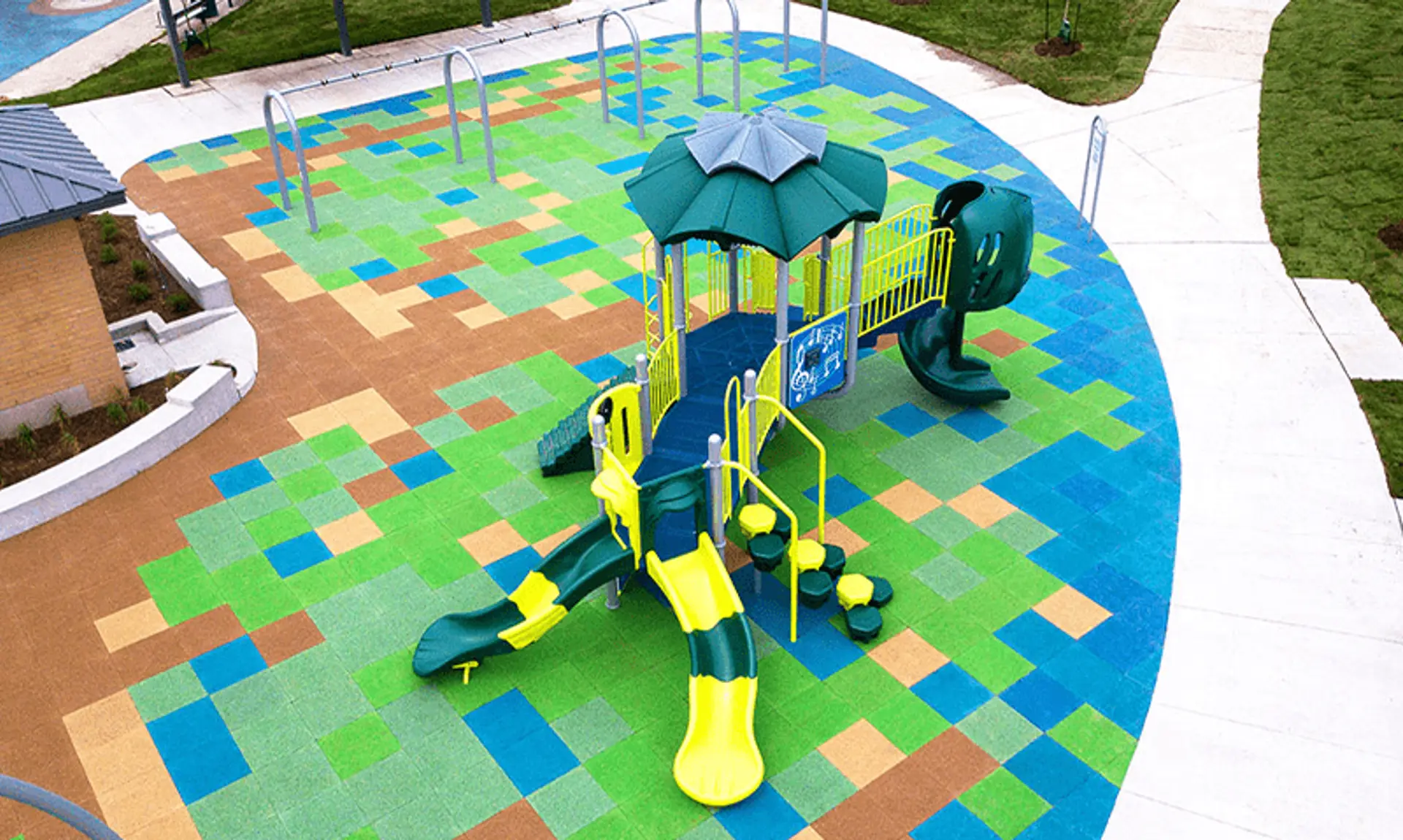
Best for: smaller areas, specific zones, or when modular replacement matters
Why people choose it
- Can be replaced tile-by-tile if damaged
- Predictable thickness and fall protection (when specified correctly)
- Cleaner than loose-fill options
Watch-outs
- Seams and edges can become issues if not installed well
- Base prep matters a lot n- Not always the best fit for large, complex layouts
Concept-stage tip
Tiles can work well for:
- Small daycare yards
- Specific accessible routes
- Defined play pods
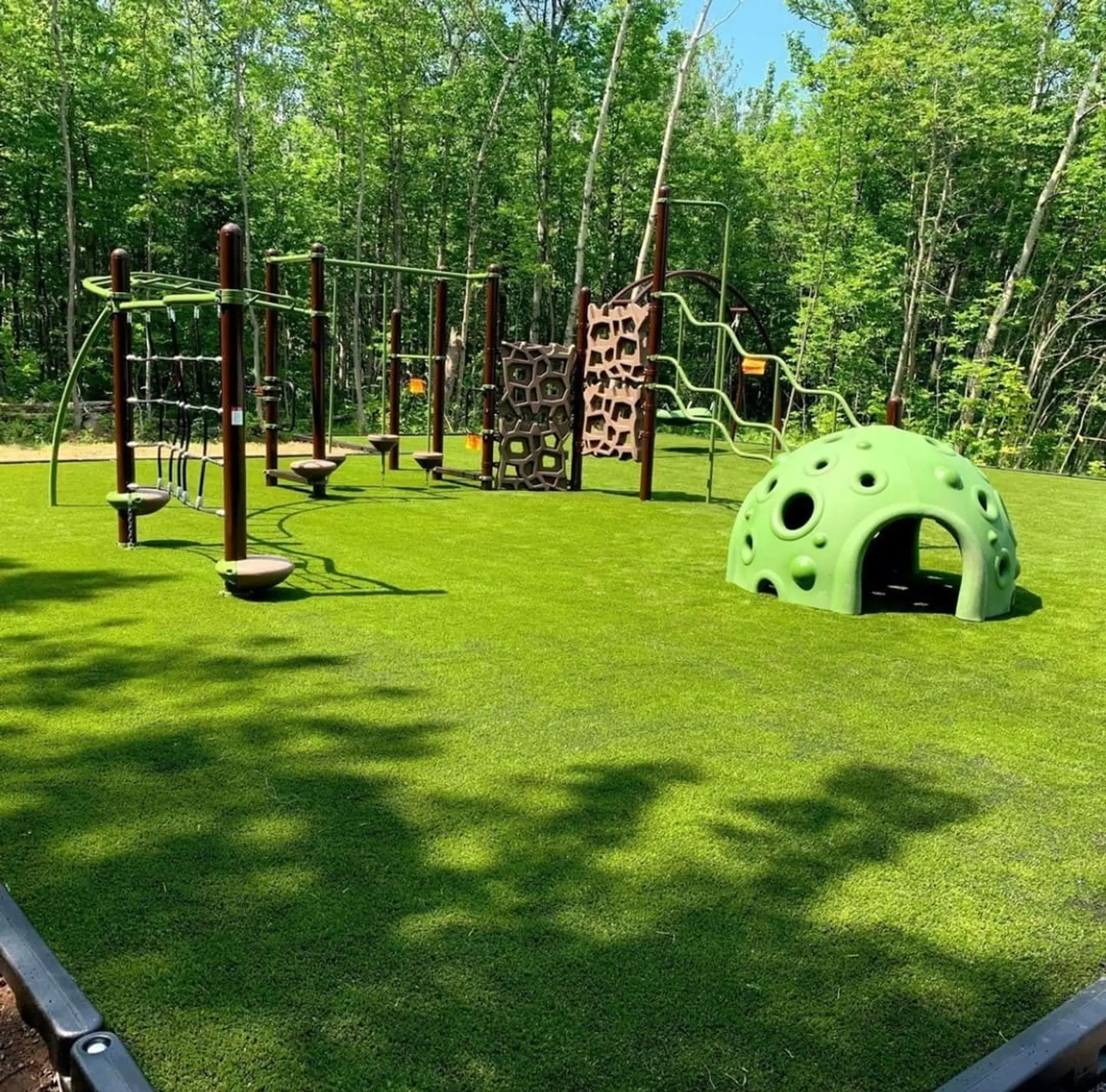
Option 4: Turf (Playground Turf / Synthetic Grass Systems)
Best for: a natural look with a more finished feel than loose-fill
Why people choose it
- Natural aesthetic
- Can feel cleaner and more park-like
- Good for multi-use areas (depending on system)
Watch-outs
- Needs the right underlayment/system for fall protection
- Drainage and base prep are critical
- Long-term care still matters (debris, infill management)
Concept-stage tip
If turf is on the table, confirm early:
- Intended fall heights
- Drainage plan
- Maintenance expectations
Quick comparison between surfacing options
SurfacingAccessibilityUpfront costMaintenanceBest fitPIPHighHigherLower (if installed right)High-traffic parks, schools, inclusive designsEWFMedium (depends on upkeep)LowerHigherBudget projects with maintenance planRubber TilesHighMedium-higherMediumSmaller sites, modular replacementTurfMedium-High (system -dependent)Medium-higherMediumNatural look + finished feel
Surfacing mistakes that cause redesigns later
- Choosing surfacing after the concept is approved
- Not matching surfacing to maintenance reality
- Ignoring drainage (wet sites + wrong surfacing = constant problems)
- Not planning edges/containment
- Not aligning surfacing with inclusion goals
Quick worksheet (copy/paste)
Use this to choose a direction fast:
- Site type: municipal park / school / daycare / other
- Top priority: accessibility / lowest maintenance / lowest upfront cost / aesthetics
- Drainage concerns: yes / no / not sure
- Shade (slow drying): yes / no / not sure
- Maintenance owner: city ops / staff / contractor / volunteers
- Shortlist (pick 2): PIP / EWF / tiles / turf
- Notes:
If you need help choosing surfacing that fits your site, budget, and maintenance, send us an email at info@westplay.ca with the following information:
- Site photos (especially wet/shaded areas)
- Your age group(s) + peak use
- Your maintenance reality
- Your budget range
Planning guides
How to plan, budget and specify a project, written for the people who have to.
Playground Project Starter Guide
The fastest way to gain clarity on your playground project and avoid expensive redesigns later. Sent straight to your inbox.