
Planning a Dog Park? Small vs Large Zones Made Simple
Splitting a dog park into small dog and large dog areas can sound like an automatic upgrade. In the right situation, it really does reduce intimidation, rough play mismatches, and owner stress.
But two zones aren’t “better” by default.
The real question isn’t Should we do it?
It’s: Can we build it and operate it properly—every day, all year?
Because when a two-zone dog park is done well, it feels calm and predictable. When it’s done poorly (or maintained inconsistently), it can create new problems: crowding, gate issues, unclear rules, and conflict right at the entrances.
This guide will help you decide whether you need one zone or two, what usually goes wrong, and how to plan a layout that’s easier to manage.
Table of Contents
- Why people ask for two zones in the first place
- The hidden cost of “two zones”
- When two zones make sense
- When one zone is the smarter choice
- The biggest mistake: splitting space without enough room
- Layout tips if you do two zones
- Simple rules that make any dog park easier to operate
- One zone vs two zones: a quick decision guide
- Want a quick recommendation for your site?
Why people ask for two zones in the first place
Most communities consider two zones for a simple reason: dogs are not all the same size or play style.
A confident 90 lb dog running full speed can be totally friendly—and still feel scary to a 12 lb dog (and their owner). Even when nothing “bad” happens, the experience can feel stressful, which means people stop using the park.
Two zones can help by creating a space where:
- small dogs can play without being bowled over
- large dogs can run and wrestle without constant tension
- owners feel more comfortable letting dogs off-leash
That’s the upside.
The tradeoff is that two zones add complexity. And dog parks are only successful when they’re easy to understand and easy to operate.
The hidden cost of “two zones”
A two-zone dog park usually means more than just one extra fence line.
It often adds more gates, more signage, more rules, and more places that need regular inspection. It can also increase wear-and-tear because you now have two entry areas, two sets of corners, and two high-traffic paths that get churned up.
If the park is not maintained well, you’ll see the same issues show up fast: mud at entries, broken latches, worn surfacing, and conflict in tight spaces.
So before you split the park, make sure the site and operations can support it.
When two zones make sense
A two-zone dog park is usually worth it when you expect high use and you have enough space to keep both sides functional.
It’s a strong choice when:
- your community has a real mix of small and large dogs using the park
- peak hours are busy
- the site is large enough that each zone still feels open
- you can maintain both areas consistently
In these situations, two zones can reduce conflict because dogs aren’t constantly forced into mismatched play.
It also helps owners self-select. People with nervous dogs, seniors with small dogs, or first-time dog owners often feel more comfortable entering a clearly marked small-dog area.
A simple way to think about it
Two zones work best when each zone can operate like a “real park,” not a leftover corner.
If one side ends up tiny, muddy, or cramped, it becomes the problem zone—and it can actually increase conflict.
When one zone is the smarter choice
A single-zone dog park can work extremely well when it’s designed with visibility, flow, and simple operations in mind.
One zone is often the better option when:
- the site is small
- peak use is moderate
- you want simpler maintenance and lower cost
- you can design the layout to keep sightlines open
- you want fewer gates, fewer rules, and fewer failure points
Here’s the key: on many small sites, splitting the space creates two cramped spaces. And cramped spaces increase conflict.
Dogs need room to move away, reset, and choose distance. When they can’t, small disagreements escalate faster—especially near gates and corners.
So if your site isn’t big enough, one well-designed zone will usually outperform two awkward ones.
The biggest mistake: splitting space without enough room
A lot of two-zone parks fail for one reason: the split happens on paper, but in real life both areas feel tight.
When space is tight, you’ll see:
- crowding at the gate
- dogs “stacking” in corners
- owners standing in circulation paths
- tension between fast-running dogs and dogs that want space
If you’re not sure whether your site is big enough, it’s often safer to build a strong single-zone park with good flow and clear sightlines.
Layout tips if you do two zones
If you decide to build two zones, the layout matters more than the sign.
You’re trying to reduce conflict, not create new choke points.
1) Give both zones a safe entry
A double-gate entry (sometimes called a “holding pen”) helps prevent dogs from rushing the gate and slipping out. It also gives owners a moment to leash/unleash calmly.
This is one of the most important features for smooth operation—especially during peak hours.
2) Keep sightlines open
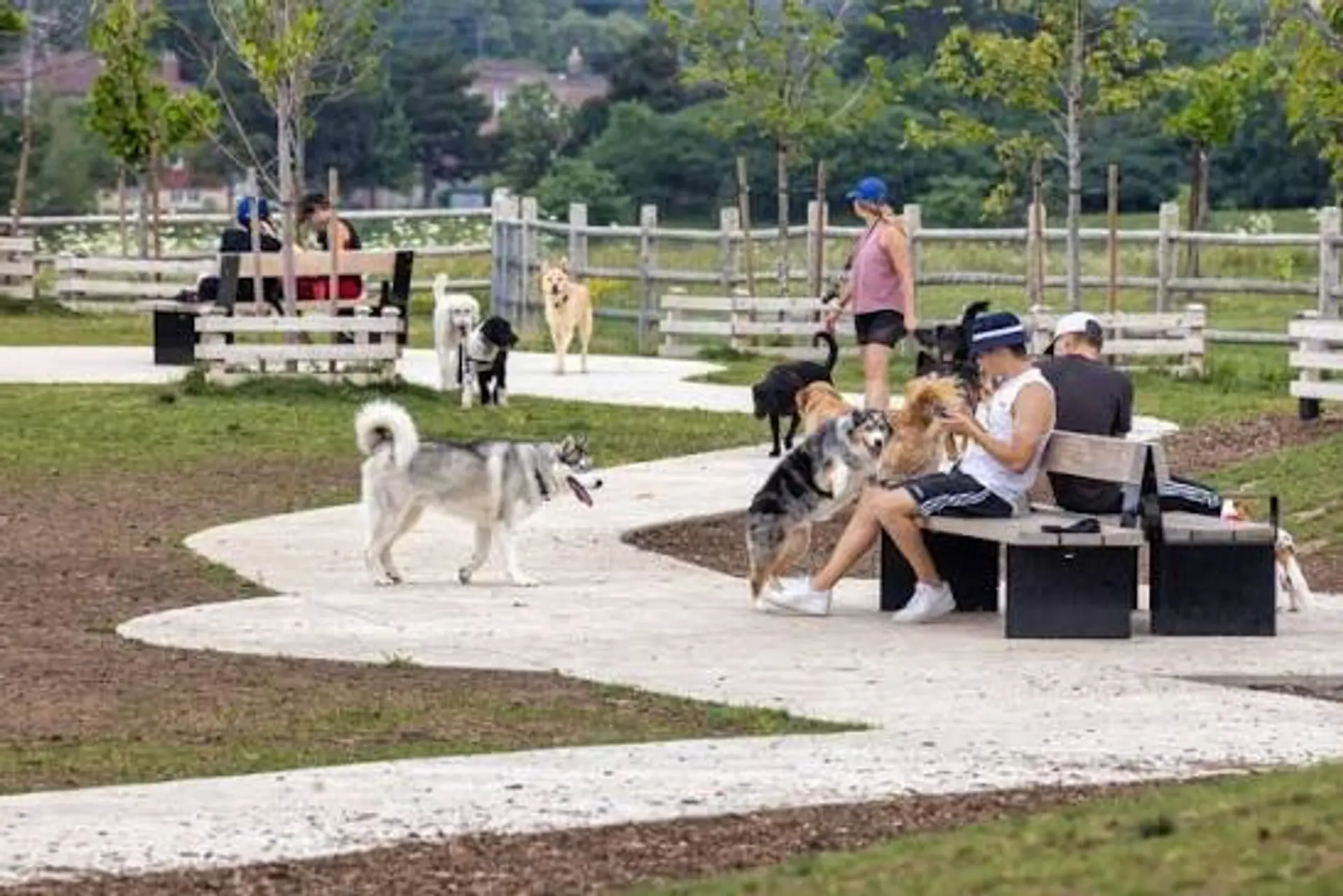
Owners need to see what’s happening quickly. Open sightlines reduce panic, reduce shouting across the park, and help people step in early when play gets too intense.
Avoid layouts that hide dogs behind tight corners, solid panels, or dense planting in the middle of the park.
3) Reinforce high-wear areas
Entries, corners, and common paths wear out first. Reinforcing these zones helps prevent mud, holes, and slippery areas that lead to complaints and more maintenance calls.
If you plan for wear early, the park stays usable longer and looks better with less effort.
4) Place seating without blocking movement
Seating is great—until it creates a bottleneck. Place seating where owners can supervise without standing directly in the main path of travel.
Good seating placement makes the park feel calmer because people aren’t constantly stepping around each other.
Simple rules that make any dog park easier to operate
Whether you build one zone or two, dog parks run best when they feel obvious.
That means:
- clear entry sequence (where to go, what to do)
- simple, readable signage
- gates that work smoothly
- waste stations placed where people actually walk
- a layout that doesn’t force dogs into tight corners
The goal is not to control every behavior. The goal is to reduce the situations where conflict is likely.
One zone vs two zones: a quick decision guide
If you want the simplest way to decide, use this:
Choose two zones when you have enough space for both sides to feel open, you expect busy peak hours, and you can maintain both areas consistently.
Choose one zone when the site is smaller, usage is moderate, or you want simpler operations with fewer gates, fewer rules, and lower ongoing maintenance.
If you’re on the fence, it’s usually better to build one great zone than two cramped ones.
Want a quick recommendation for your site?
If you want a quick recommendation on one zone vs two zones based on your site and expected use, email info@westplay.ca with:
- Your city
- Rough site size
- 3–5 photos
We’ll tell you what’s likely to work best—and what to avoid—so you end up with a dog park that’s easier to operate and more enjoyable to use.

Planning guides
How to plan, budget and specify a project, written for the people who have to.
Playground Project Starter Guide
The fastest way to gain clarity on your playground project and avoid expensive redesigns later. Sent straight to your inbox.