
Make Your Playground Unforgettable With Outdoor Music
Outdoor musical instruments don’t just add “something extra” to a playground—they change the whole feel of the space. When kids can create sound together, play becomes more social, more inclusive, and more memorable. For municipalities, schools, and daycares, a small outdoor music area is one of the simplest ways to add a fresh attraction that families actually use.
This guide is an overview of what outdoor music is, why it works, and how to think about it in a practical and accessible way.
Table of Contents
- Outdoor music is a different kind of play
- 5 reasons outdoor musical instruments work so well in public spaces
- Where outdoor musical instruments fit best
- What a simple “music zone” can look like
- Common question: “Will it be too loud?”
- How to get started (without overcomplicating it)
- Next step: get a simple concept plan
Outdoor music is a different kind of play
Traditional playgrounds are often built around climbing, sliding, and swinging. Outdoor music adds a new layer—creative play that doesn’t require a certain level of strength, confidence, or mobility to participate.
Instead of “Can I climb that?”, the question becomes “What happens if I try this?” That shift opens the door for more kids to join in.
5 reasons outdoor musical instruments work so well in public spaces
1) It creates instant social play
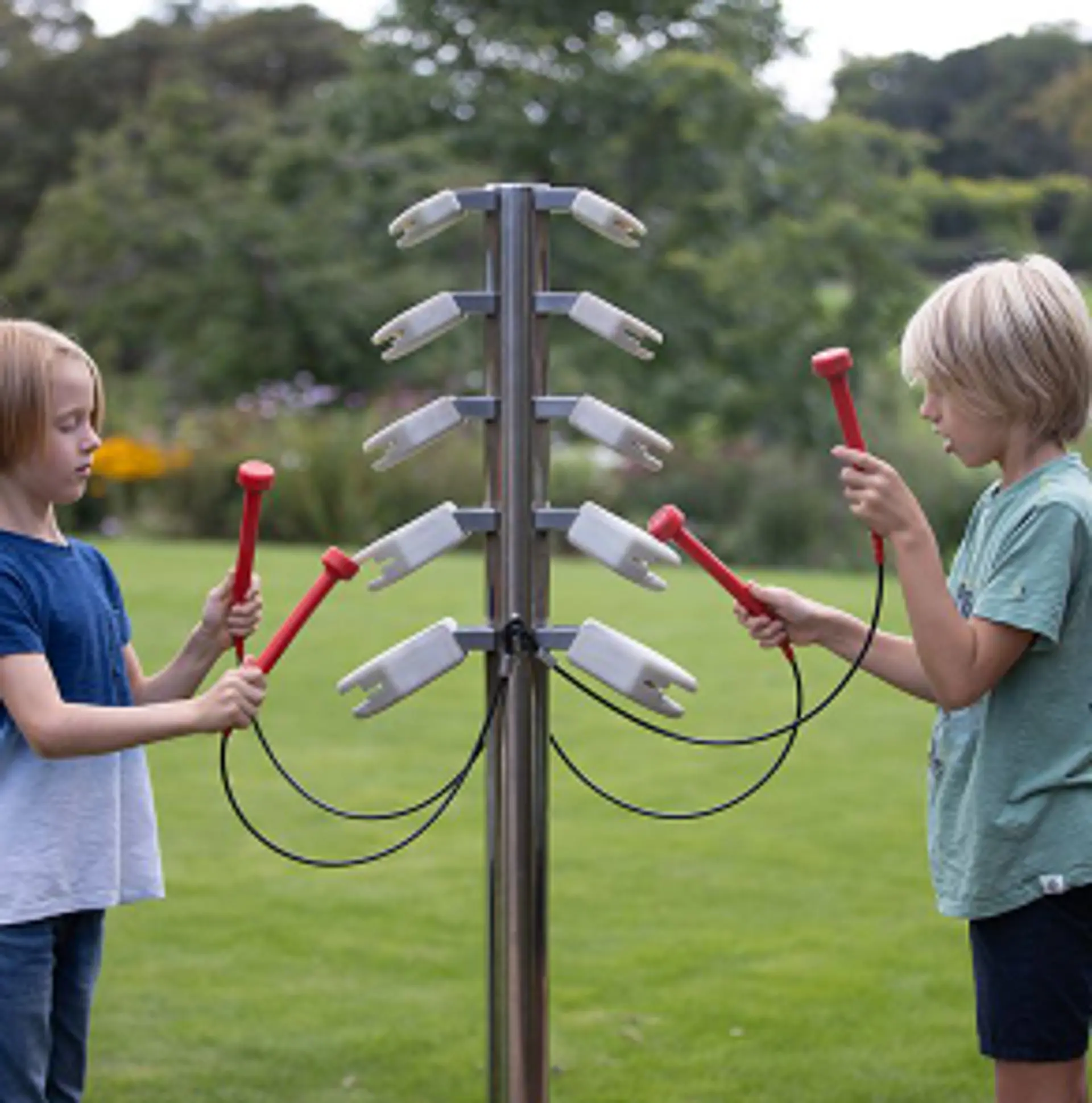
Outdoor music naturally encourages turn-taking, listening, copying rhythms, and “band-style” collaboration. Kids don’t need instructions—someone taps, someone answers, and suddenly they’re playing together.
2) It supports inclusive play (without feeling like a special feature)
Sound play can be accessible in ways that many physical play elements aren’t. When instruments are placed along an accessible route with enough space to approach and participate, kids of different abilities can engage side-by-side.
3) It’s intergenerational—adults join in
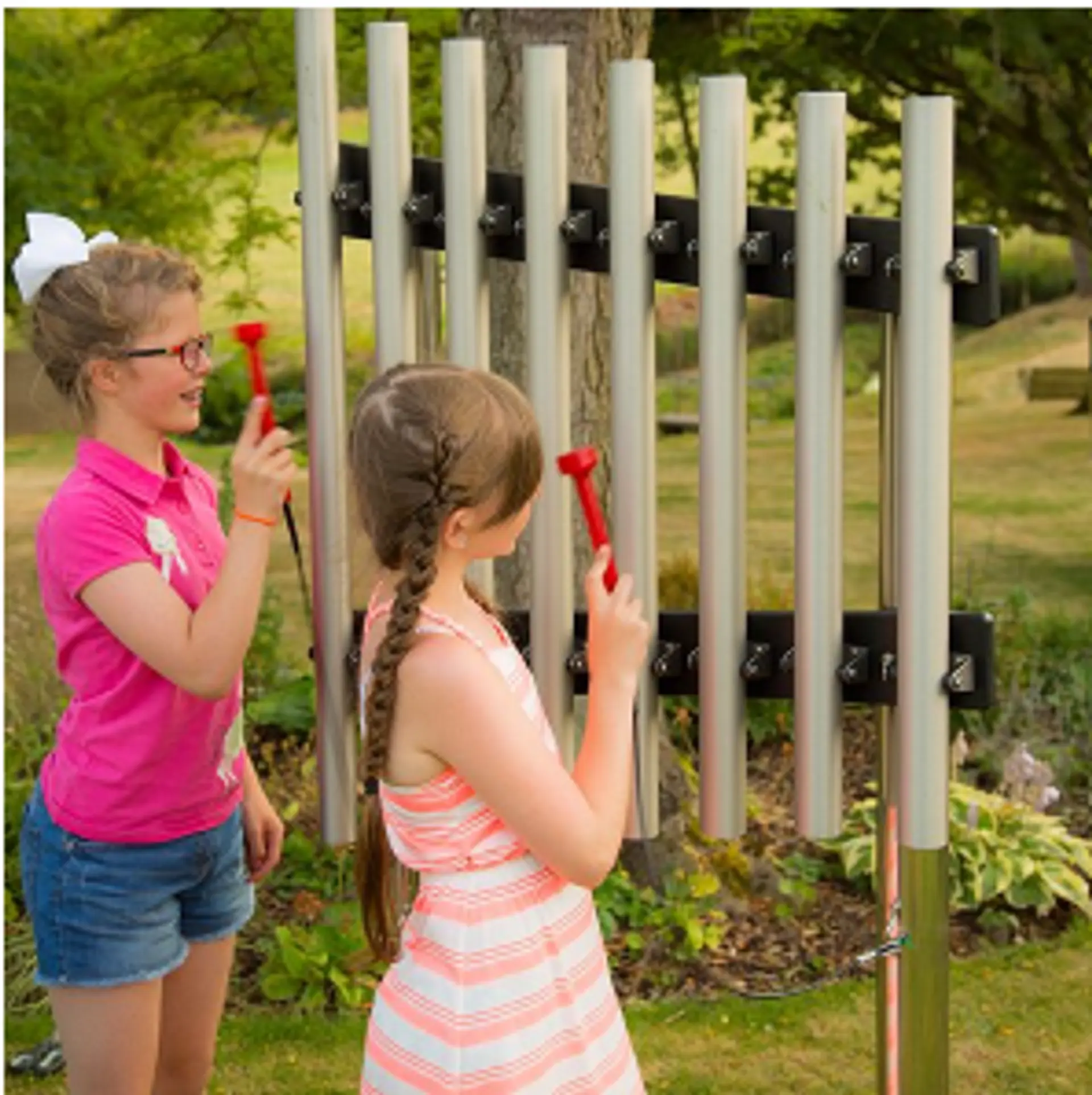
One of the best surprises with outdoor music is how often caregivers participate. Adults who might not climb a structure will absolutely try a chime or drum with a child. That creates a warmer, more connected park experience.
4) It adds “wow” without needing a full playground replacement
A music area can be a standalone upgrade. If a park has an older structure that still functions, adding outdoor instruments can make the site feel new again—often with a smaller footprint and a simpler scope.
5) It makes a space feel like a destination
Unique features get talked about. They get shared. They become “the park with the music.” That’s valuable for municipalities and communities trying to create spaces people are proud of.
Where outdoor musical instruments fit best
Outdoor music works in more places than most people expect:
- Parks and playgrounds (new builds or retrofits)
- School grounds (recess culture, inclusive play)
- Daycares and early learning centres (high play value in small spaces)
- Community hubs (libraries, community centres, plazas)
- Campgrounds and public trails (as a “music stop” along a loop)
What a simple “music zone” can look like
You don’t need a huge installation to get the benefits. A strong starting point is a small cluster that supports both solo and group play.
A practical starter approach:
- 1–2 instruments that invite group play (so multiple kids can join)
- 1 instrument that’s calmer and more “exploratory”
- Space around the instruments so kids can approach from different sides
The goal is variety—different tones, different ways to interact, and enough room to avoid crowding.
Common question: “Will it be too loud?”
This is the first question we hear—and it’s a fair one.
In real outdoor settings, sound behaves differently than indoors. With smart placement (not right beside homes, oriented thoughtfully, and paired with natural buffers like landscaping), outdoor music can be a positive feature without becoming a nuisance.
The key is planning the location intentionally—just like you would with a basketball court, splash pad, or other active feature.
How to get started (without overcomplicating it)
If you’re exploring outdoor musical instruments for the first time, keep it simple:
- Decide who the space is for (ages, group size, accessibility needs)
- Identify the best location (visibility, access, comfort, buffers)
- Choose a small set of instruments that creates variety
- Plan for comfort: seating, shade, and a clear pathway
Next step: get a simple concept plan
Share your site type (park, school, or daycare), the approximate space available, and the vibe you want (calm, energetic, or mixed). We’ll help you map out a starter Westplay Musical zone that fits your budget and your community.
Want a quick starting point? Email info@westplay.ca or call +1 604-424-4168 with a photo of the area and a rough measurement, and we’ll recommend a simple layout and a first set of outdoor instruments.
Planning guides
How to plan, budget and specify a project, written for the people who have to.
Playground Project Starter Guide
The fastest way to gain clarity on your playground project and avoid expensive redesigns later. Sent straight to your inbox.